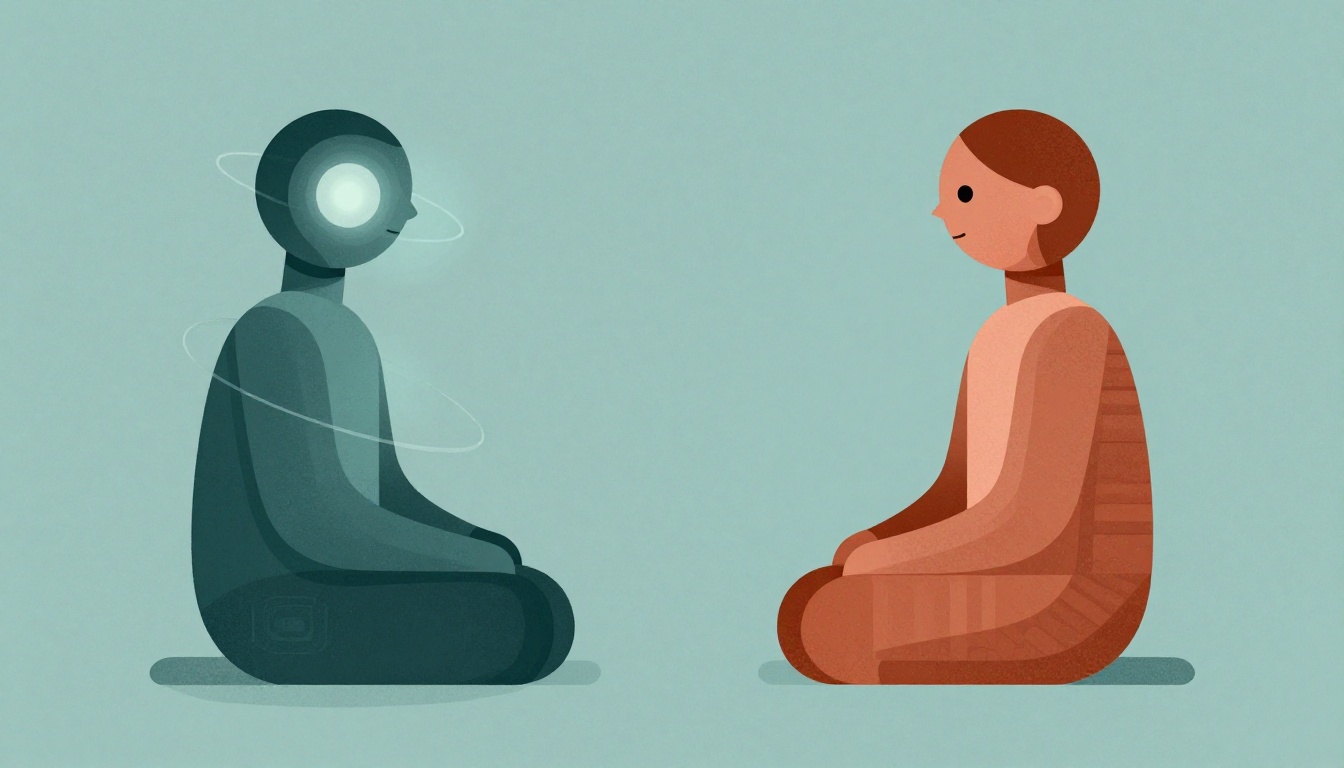
If you're exploring deep therapy options, you've likely encountered two names: Internal Family Systems (IFS) and schema therapy. Both go beyond surface-level symptom management, and both acknowledge that your inner world is made up of different parts or states. But they offer different maps for understanding your struggles and different tools for change. Choosing between them can feel overwhelming, but understanding their core differences will help you make an informed decision.
Which statement accurately reflects a key difference between IFS and schema therapy?
Select one answer.
What each therapy is and how they differ
IFS, developed by Richard Schwartz in the 1980s, views the mind as naturally multiple. You have protective parts (managers and firefighters) and wounded parts (exiles), all organized around a core Self. The goal is to help your parts unburden their pain so your innate Self—characterized by qualities like compassion, curiosity, and calm—can lead your internal system. IFS uses internal dialogue, guided imagery, and mindfulness to access and integrate parts. It emphasizes emotions and somatic experience, and it's often described as a non-pathologizing, compassionate approach.
Schema therapy, developed by Jeffrey Young in the 1990s, focuses on early maladaptive schemas—deep, enduring patterns formed in childhood when core emotional needs (like safety, love, or boundaries) weren't met. These schemas shape how you see yourself and others, and they manifest as schema modes: moment-to-moment emotional states and coping styles. Schema therapy uses cognitive, experiential, and relational techniques—including imagery rescripting and chair work—to weaken maladaptive schemas and build a stronger Healthy Adult mode. It was originally designed for personality disorders and has a strong evidence base for conditions like borderline personality disorder.
Key differences at a glance
| Dimension | IFS | Schema Therapy |
|---|---|---|
| Core model | Parts and Self system | Early maladaptive schemas and modes |
| Origin of suffering | Parts carrying burdens from past wounds | Unmet core emotional needs in childhood |
| Change mechanism | Self-led unburdening of wounded parts | Schema weakening through cognitive, experiential, and relational work |
| Therapist role | Facilitator of internal exploration | Active reparenting figure |
| Key technique | Internal dialogue with parts | Imagery rescripting |
| Typical duration | Variable, months to years | 1–3 years typical |
| Best for | Trauma, inner conflict, self-criticism | Personality disorders, chronic relational patterns |
How to decide which is right for you
Consider IFS if:
- You resonate with the idea of inner multiplicity and want to befriend your parts rather than pathologize them.
- You prefer a client-led, exploratory process where the therapist facilitates rather than directs.
- Your struggles involve self-criticism, inner conflict, or trauma, and you want to access a core sense of Self.
- You value a model that emphasizes emotions and bodily sensations.
Consider schema therapy if:
- You have long-standing patterns that feel deeply entrenched, especially in relationships or self-worth.
- You're dealing with a personality disorder diagnosis or complex trauma with early deprivation.
- You want a structured, therapist-guided approach that actively builds new capacities, like a Healthy Adult mode.
- You respond well to cognitive and behavioral techniques combined with experiential work.
Practical steps to choose
- Identify your primary struggle. Are you more aware of inner conflict and self-criticism (IFS territory) or pervasive patterns of feeling unworthy or unsafe in relationships (schema territory)?
- Consider your therapy goals. If you want to access a calm, compassionate center, IFS may fit. If you want to actively build new emotional skills, schema therapy might be more direct.
- Research therapist availability. Look for a therapist trained in either modality. Ask about their experience with your specific concerns.
- Try a few sessions. Both approaches are experiential; you'll get a feel for which resonates. A good therapeutic fit matters as much as the model.
- Ask about integration. Some therapists blend IFS and schema therapy, especially when clients have entrenched protective systems that need active building. As one source notes, schema therapy offers something IFS does not emphasize: active building of healthy adult capacity when developmental absence prevents Self-energy from emerging (schematherapytraining.us).
Evidence and popularity
Schema therapy has a larger evidence base for personality disorders, with a study showing 52% recovery rates for borderline personality disorder compared to 28% for treatment-as-usual (schematherapytraining.us). IFS has a growing but smaller evidence base, with studies supporting its use for depression, pain, PTSD, and dissociation (societyforpsychotherapy.org). Both are widely practiced, but IFS has seen a surge in popularity, with over 45,000 therapists listing it on Psychology Today as of April 2024 (societyforpsychotherapy.org).
Quiz: Test your understanding
Which statement accurately reflects a key difference between IFS and schema therapy?
- A. IFS focuses on building a Healthy Adult mode, while schema therapy accesses an innate Self.
- B. Schema therapy emphasizes schemas and modes, while IFS works with parts and the Self.
- C. Both therapies use identical techniques and have the same theoretical basis.
Correct answer: B. Schema therapy focuses on schemas and modes, while IFS works with parts and the Self, as noted in the comparison above.
How the Featured Expert Can Help
Taylor Integrated Therapy PLLC, based in Ann Arbor, Michigan, provides psychotherapy, coaching, supervision, and consultation with a focus on complex and underrepresented clinical spaces. They emphasize evidence-based, values-driven care for individuals, couples, and clinicians seeking clarity and growth. If you're unsure whether IFS or schema therapy is right for you, a consultation can help you explore your options. Visit Taylor Integrated Therapy to learn more.