
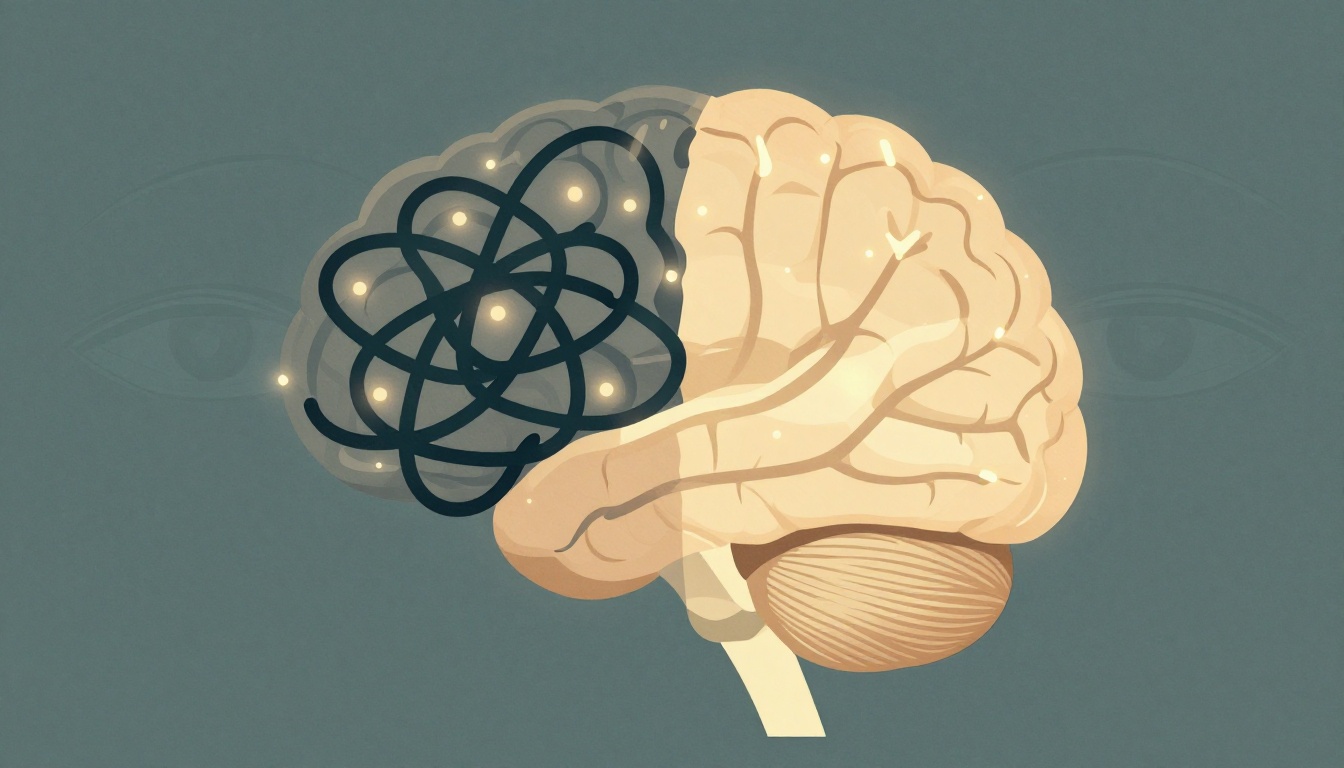
If you have experienced trauma, you may feel stuck in a loop of intrusive memories, hypervigilance, and emotional overwhelm. Standard talk therapy can help, but sometimes the brain needs a different kind of intervention to actually reprocess the memory rather than just talk about it. Eye Movement Desensitization and Reprocessing (EMDR) therapy is designed to do exactly that: it changes how the traumatic memory is stored in the brain, reducing its emotional charge and allowing you to move forward.
Which brain region does EMDR help calm down during trauma processing?
Select one answer.
What happens in the brain during trauma
When you experience a traumatic event, your brain's fear center — the amygdala — becomes overstimulated. At the same time, the prefrontal cortex, which handles rational thought, loses its ability to regulate that fear response. The hippocampus, which normally helps file memories into the correct context, fails to integrate the experience. As a result, the memory gets "stuck" in the amygdala-hippocampal complex, and when triggered, it feels as though the event is happening all over again. This is the neurobiological basis of PTSD.
How EMDR changes the brain
EMDR therapy uses bilateral stimulation — typically side-to-side eye movements, tapping, or auditory tones — while you briefly focus on a traumatic memory. This process appears to mimic the brain activity that occurs during REM sleep, when memories are normally consolidated and filed away. Research suggests that bilateral stimulation induces a neurobiological state similar to slow-wave sleep, which helps depotentiate overactive synapses in the amygdala and allows the hippocampus to properly integrate the memory into existing semantic networks source.
In practical terms, EMDR temporarily slows down the overstimulated amygdala, synchronizes brain waves, and brings the prefrontal cortex back online. The traumatic memory is reactivated, replayed, and re-encoded into normal memory networks — so it no longer triggers the same intense emotional and physiological response source.
What the research shows about effectiveness
EMDR is one of the most researched trauma therapies. A meta-analysis of randomized controlled trials confirmed that EMDR significantly reduces symptoms of PTSD, depression, anxiety, and subjective distress source. The U.S. Department of Veterans Affairs notes that EMDR produces moderate to strong treatment effects for PTSD symptom reduction and loss of PTSD diagnosis source.
One landmark study found that after a mean of six 50-minute EMDR sessions, 100% of single-trauma victims and 77% of multiple-trauma victims no longer met the criteria for PTSD source. These results highlight EMDR's potential for rapid, lasting change.
What to expect in an EMDR session
EMDR follows an eight-phase protocol:
- History taking — Your therapist assesses your history and identifies target memories.
- Preparation — You learn coping skills and grounding techniques.
- Assessment — You identify the target memory, along with the negative belief and desired positive belief.
- Desensitization — While focusing on the memory, you follow bilateral stimulation. This is the core processing phase.
- Installation — The positive belief is strengthened.
- Body scan — You check for any residual physical tension related to the memory.
- Closure — Each session ends with a return to equilibrium.
- Reevaluation — At the start of the next session, you assess progress.
You do not need to describe the trauma in detail. The focus is on what you feel in your body and the emotions that arise, not on narrating the event.
Is EMDR right for you?
EMDR is effective for single-incident trauma, complex trauma, and a range of conditions including anxiety, depression, and grief. It is especially helpful if you feel stuck in talk therapy or find it difficult to verbalize your experience. Because it works directly with the brain's memory processing systems, it can produce results in fewer sessions than traditional approaches.
How the Featured Expert Can Help
If you are considering EMDR, working with a trained and experienced provider is essential. Taylor Integrated Therapy PLLC, based in Ann Arbor, Michigan, offers psychotherapy, coaching, and consultation with a focus on complex and underrepresented clinical spaces. Their evidence-based, values-driven approach can help you determine whether EMDR is the right fit for your needs. Visit their website at taylorintegratedtherapy.com to learn more.
Quiz: Test your understanding
Which brain region does EMDR help calm down during trauma processing?
A. Prefrontal cortex B. Amygdala C. Hippocampus